

Key Takeaways
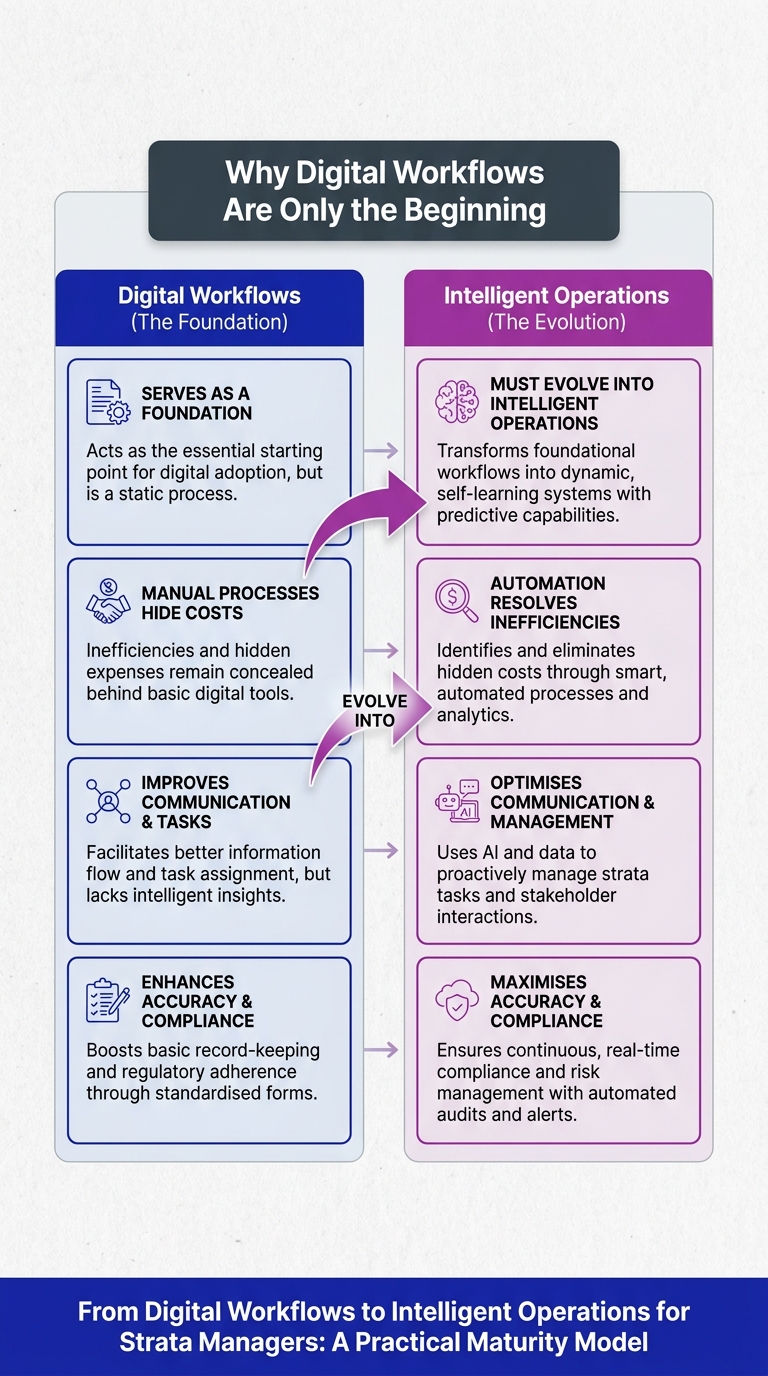
Digital workflows serve as a foundation but must evolve into intelligent operations.
Manual processes hide costs and inefficiencies that automation can resolve.
Connected workflows improve communication and task management in strata.
Business process automation enhances accuracy and compliance in operations.
Key Answer
Discover how strata managers can transition from digital workflows to intelligent operations with a practical maturity model, boosting efficiency through business process automation.
Navigating the landscape of strata management in Australia, you might find yourself overwhelmed by manual processes that bog down efficiency and communication.
The evolution from digital workflows to intelligent operations offers a revolutionary path forward. This practical maturity model aims to guide you through transitioning from cumbersome paperwork to connected digital workflows, and eventually, to smart, automated operations.
Throughout this journey, business process automation and workflow automation emerge as critical tools, enhancing every aspect of your strata management tasks without replacing the vital human element.
Why Digital Workflows Are Only the Beginning
Embracing digital workflows is a pivotal step for strata managers. However, resting on the laurels of basic digitisation could mean missing out on greater operational efficiencies. While digital workflows help streamline tasks and reduce paper clutter, they often fall short when it comes to integrating processes that require nuanced decision-making and real-time adaptations. By enhancing these workflows with automation, you can establish a foundation for more sophisticated strata operations.
Digital workflows are like the scaffolding for more advanced systems. They lay the groundwork, providing a basic level of organisation and efficiency. Yet, without further evolution, they can lead to bottlenecks, particularly when processes become complex or require integration with external systems. Leveraging technologies such as business process automation allows these workflows to transform into dynamic, responsive systems that cater to the ever-changing demands of strata management.
Incorporating intelligent operations is the next logical step, where systems not only perform tasks but also analyse data, predict trends, and make recommendations. This transition from digital to intelligent can significantly boost productivity and service delivery in strata management.
Stage 1: Manual Operations and Their Hidden Costs
Operating manually often results in hidden costs that many strata managers overlook. Manual processes are prone to human error, time-consuming audits, and miscommunications. They often lead to inefficiencies that impact the quality of service delivery.
Moreover, manual operations lack the flexibility to respond promptly to urgent requests, such as maintenance emergencies. This results in delayed responses, impacting tenant satisfaction and potentially leading to costly repairs due to neglect. Manual data handling also increases the likelihood of errors that can lead to significant compliance breaches, especially when dealing with intricate strata schemes legislation.
The financial and reputational risks associated with manual processes highlight the necessity of transitioning to more efficient systems. Moving from these manual processes to connected digital workflows can help mitigate these risks while improving overall operational efficiency.
Stage 2: Building Connected Digital Workflows
Once you identify the limitations of manual operations, the next step is to build connected digital workflows. This involves digitising your most cumbersome processes, such as billing, maintenance requests, and committee communications. By doing so, you establish a more coherent flow of information, enhancing the reliability and speed of your operations.
Connected digital workflows allow for seamless integration across various operational facets. For instance, digitising maintenance requests ensures that issues are logged, tracked, and resolved more efficiently, reducing downtime and improving tenant satisfaction.
Using platforms that support workflow automation can further enhance these processes by automatically routing tasks to the appropriate team members, sending reminders, and generating reports. This not only saves time but also ensures that no task falls through the cracks.
Stage 3: Automating Everyday Business Processes
With digital workflows in place, the natural progression is to automate everyday business processes. This stage involves employing business process automation tools to handle routine tasks such as invoice processing, scheduling, and compliance management.
Automation reduces the repetitive workload on your team, allowing them to focus on more strategic activities like tenant engagement and service improvement. By automating these routine tasks, you can ensure higher accuracy and faster turnaround times, which are crucial for maintaining high standards in strata management.
Furthermore, automation enhances data accuracy and facilitates compliance with strata legislation. Automated systems can provide real-time updates and alerts for regulatory changes, ensuring that your operations remain legally compliant without the constant need for manual oversight. This step is a crucial part of transitioning towards maintenance management excellence in strata management.
Stage 4: Moving Towards Intelligent Operations
Intelligent operations represent the pinnacle of strata management maturity. At this stage, automation is complemented by advanced analytics and artificial intelligence. Here, systems can not only automate tasks but also predict maintenance needs and identify trends to improve decision-making.
The move towards intelligent operations allows you to harness data for proactive management. For example, predictive maintenance can identify potential equipment failures before they occur, saving costs and preventing disruptions. Additionally, AI-driven analytics can provide insights into tenant behaviour, helping tailor services to better meet their needs.
By integrating technologies such as the Internet of Things (IoT), you can also monitor building health in real time. This allows for a swift response to any issues, ensuring optimal living conditions for tenants and upholding the integrity of the properties you manage. Adopting such intelligent operations is not just a technological leap–it’s a strategic advantage in today’s competitive strata management landscape.
How to Assess Your Business Process Maturity
To assess your current business process maturity, start by evaluating the degree of automation and integration within your workflows. Identify areas where manual processes still dominate and consider their impact on overall efficiency and compliance.
Conduct a gap analysis to understand the current state versus the desired state of your operations. This involves examining key performance indicators such as response times, error rates, and customer satisfaction levels. By doing so, you can pinpoint areas for improvement and prioritise them accordingly.
Common Mistakes When Implementing Business Process Automation
Many strata managers dive into automation without a clear plan, leading to common pitfalls that can derail the process. One typical mistake is underestimating the importance of data quality. Automation depends on accurate and up-to-date data; hence, failing to clean and maintain data integrity can render automated systems ineffective.
Another error is neglecting to train staff adequately. As systems become more sophisticated, the need for continuous training increases. Without proper training, your team may struggle to leverage new technologies effectively, leading to frustration and underutilisation of resources.
Finally, automation should not be viewed as a one-size-fits-all solution. Tailoring the automation strategies to fit the unique needs of your strata operations is crucial for achieving the best results. It is essential to regularly review and adjust your approaches to ensure they align with organisational goals and changing industry standards.
The Future of Strata Management Starts with Better Processes
As you look towards the future of strata management, embracing better processes through automation and intelligence is crucial. Implementing a practical maturity model helps streamline operations, boost efficiency, and enhance service delivery, paving the way for a more resilient and agile management framework.
The journey from digital workflows to intelligent operations involves embracing technology while maintaining a human touch. By continuously assessing and refining your processes, you position yourself to meet the evolving demands of strata management, ensuring longevity and success in your operations.
This transformation is not just about technology; it’s about fostering a culture of innovation and adaptability. As you refine your processes, you improve not only the operational aspects but also the overall satisfaction and experience for tenants and stakeholders alike.
Schedule your demo now to simplify operations, improve service delivery, and build a more efficient strata management business.
Frequently Asked Questions
The stages include Manual Operations, Building Connected Digital Workflows, Automating Everyday Business Processes, and Moving Towards Intelligent Operations.
Workflow automation improves efficiency, reduces errors, and enhances compliance by streamlining and integrating various strata management tasks.
Data quality ensures that automated systems function accurately and effectively, leading to better decision-making and operational success.
Predictive maintenance uses data analytics to foresee equipment failures, allowing for proactive repairs and reducing downtime.
By evaluating the integration and automation level of workflows and conducting a gap analysis to identify areas for improvement.